


Digital Marketing Strategies for Tech Startups
 Startups are a leading business model that drives innovation and economic growth worldwide. Each year, new types of products and services are created by startups. They serve as a great example of entrepreneurial creativity and ambition, as well as the emergence of ground-breaking concepts. Unfortunately, marketing is not one of their strong suits. And it’s understandable: most of them got their start not by writing case studies and sending emails but by building cutting-edge technology. Not to mention that traditionally, digital marketing was only available to large corporations in the B2B (business-to-business) and B2C (business-to-consumer) sectors.
However, there is some good news. According to First Site Guide, 7.1% of the startups in the world operate in the fintech industry. Followed by life sciences and healthcare with 6.8%, artificial intelligence with 5.0%, gaming 4.7%, adtech 3.3%, and edtech with 2.8%. Modern startups are drawn to the internet and digital technology, despite the lack of precise industry distribution data. As a result, a strong online marketing plan is essential for every business hoping to achieve success.
When it comes to digital marketing, Tech firms should put a lot of effort investing into many different aspects. Most importantly, this powerful tool is here to stay, and it can quickly enhance your Tech startup’s success. Today, web advertising is more inclusive than ever before: it knows no boundaries. For example, if you have a software company and you want to target customers in several countries, online marketing will help you achieve that. In this article, we will guide you through some ways to develop an effective digital marketing strategy for your Tech startup.
1. Create a Buyer Persona
Developing a buyer persona is the most critical step in digital marketing and that’s the reason we put it at the forefront. This includes gathering important details about your audience, such as age, name, location, income, job, their demands and how they search for products and services on the internet. Once you have successfully gathered this information, you can focus on building the right marketing strategy. There is enough evidence to suggest that the buyer persona is essential for every modern business. Even more so when it comes to a Tech startup, because many IT experts have already joined the initiative to offer their services to customers all over the world.
2. Email marketing
Did you know that email marketing continues to dominate the startup marketing world? This tool allows you to connect with your target audience in ways that no other channel can. While it is a platform that has been around for many years, it is still one of the most effective startup channels, which is why marketing giants suggest relying on email newsletter solutions to harness the full potential of email marketing.
Developing a buyer persona is the most critical step in digital marketing
3. Start a blog
Creating a blog is one of the most successful ways to begin increasing traffic in the technology startup sector. Remember, you have great tech skills to capitalize on, so if writing isn’t your strong suit, hire a writer or content creator. It is one of the most effective methods to showcase your brand’s story and spread the word about your products and services. Blogging will help with SEO and increase your search rankings. Take advantage of all the ways you can benefit from your content efforts. A couple of ideas are to include relevant and reliable sources and links in your blog posts, link your website content to posts, and write guest blogs to improve brand awareness and get your name out there. Blogging also gives you a lot of versatility. You can decide the direction of your blog and the type of content you want to share. For example, you can write about anything from specialized technology topics to industry news.
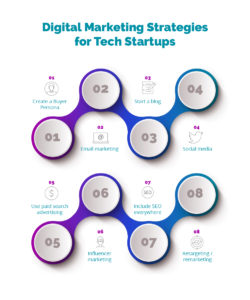
4. Social media
While social media is a powerful networking platform, it has also evolved into a savvy marketing tool that businesses in a number of sectors use to broaden their reach. And because it’s a huge platform, crafting your startup’s social media marketing strategy can be overwhelming. You could start by determining the platform that fits your brand. Facebook, Twitter, Instagram, Tik Tok, Reddit, Pinterest and LinkedIn all have unique things to offer. All these platforms offer many ways to engage with audiences, from joining the discussion on a trending hashtag to publishing articles on LinkedIn and empowering employees to act on your company’s behalf. Participate in LinkedIn groups and answer questions on Quora. At the same time, seek out discussions that are relevant to the solution you offer and find a way to help out.
5. Use paid search advertising (SEM)
Paid search has become a very popular advertising channel for startups. It allows users to buy laser-targeted traffic on search engines such as Google and Bing, two of the leading paid search networks that offer the ability to target keywords on a cost-per-click (CPC) pricing model. Using either of these networks, you can create customized ads for your startup that appear in search results when someone searches for a keyword related to your business.
SEO is the foundation of successful digital marketing
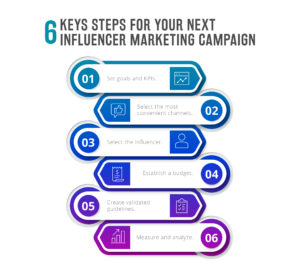
6. Influencer marketing
Prominent Tech leaders who have huge followings on social media have authority and influence within the IT industry and market. Influencer marketing can be very powerful in this sector when companies utilize these tech leaders. If they have the secret sauce, i.e. a large following in your industry, they likely have influence over your target market. Partnering with these content creators can help you drive brand awareness to your target audience. Once your target audience is aware of your startup, your goal is reached.
7. Include SEO everywhere
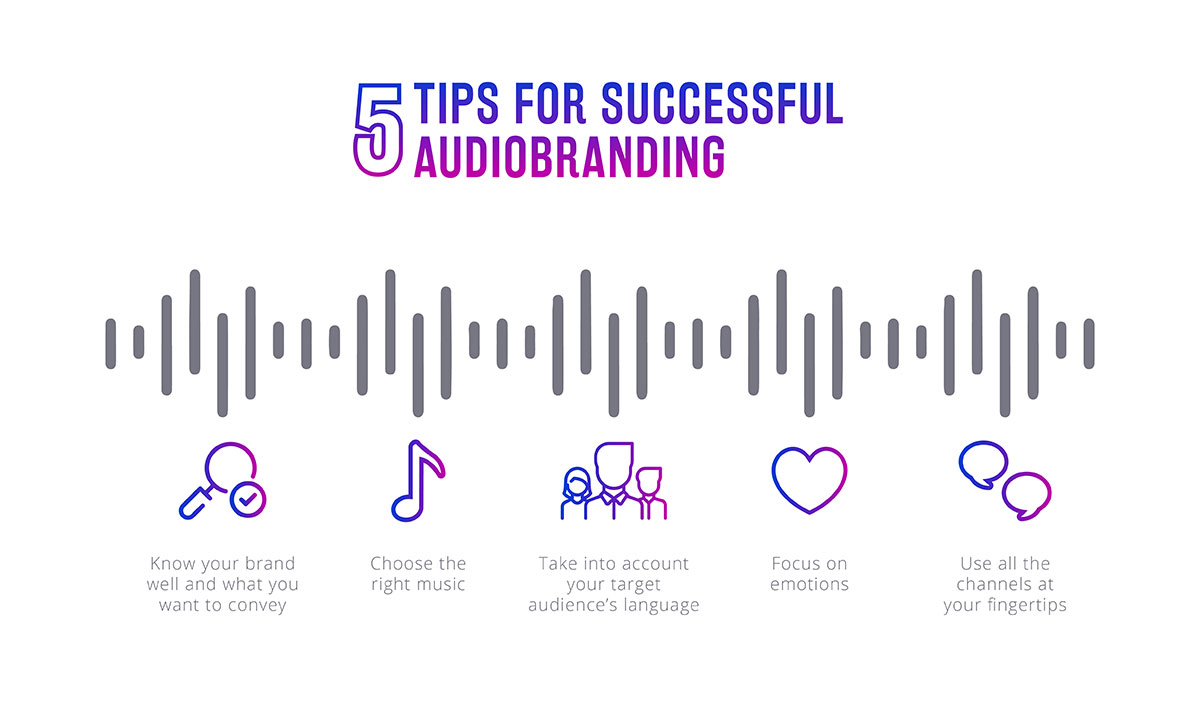
Search engine optimization (SEO) is the foundation of promising digital marketing. Besides being the basis of organic marketing, it is a key determinant of long-term marketing success. In fact, most marketers and experts associate SEO with long-form content or as part of the best blogging practices. However, you can use relevant keywords in your social media posts, hashtags, product descriptions, etc. We suggest you incorporate an SEO strategy into your blog posts, overall content curation and marketing strategy. In addition, including long-tail keywords in your topic selection and blog content is an effective way to attract traffic in the long term.
8. Retargeting / Remarketing
Email marketing, social media advertising and display ads are great for retargeting strategies. Retargeting is basically a marketing campaign based on a user’s past behavior. For example, LinkedIn allows you to set ads for specific individuals based on what they have done on your website. Meaning, if someone visits your website, adds an item to a shopping cart but doesn’t complete the purchase, you can place an ad for that product on LinkedIn and/or send the user a personalized email reminding them to come back and complete their purchase. While the terms “retargeting” and “remarketing” are sometimes used interchangeably, the main difference is that retargeting is primarily concerned with sending cookie-based ads to potential customers, whereas remarketing is typically email-based.
So, now you know. At Isource we have all the tools and resources you’ll need to make your startup marketing campaign go through the roof. From creating a buyer persona and social media strategy to developing a search and SEO campaign, you can count on us to provide the best support possible at https://old.web.isource.us/#contact Contact us!



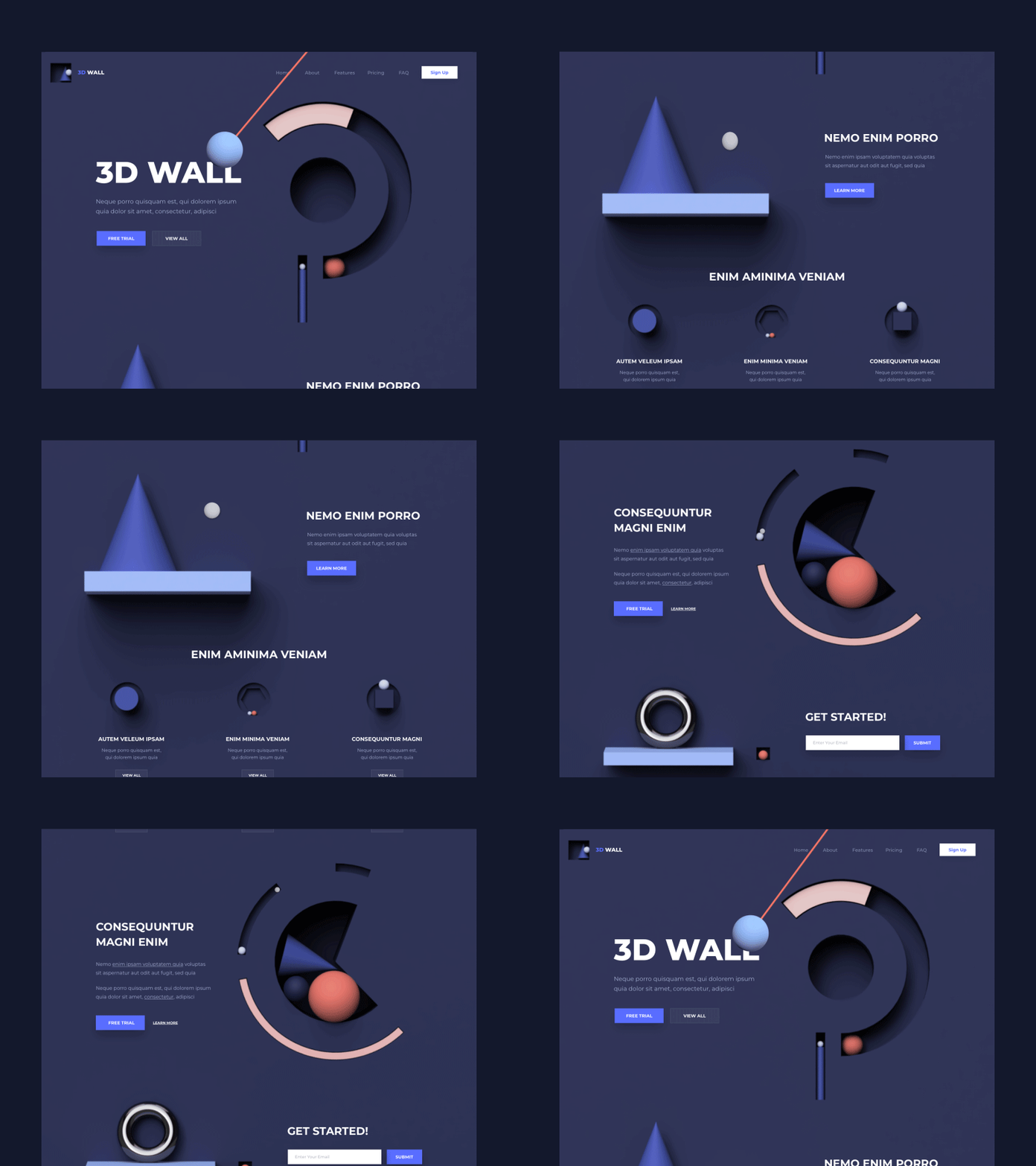
 For several years now, many brands have been investing in alternative marketing strategies by sharing the stories behind their products and services. The growing trend of content creation instead of ad generation has established them as storytellers and creators of experiences, which is why more companies are showing interest in immersive technologies.


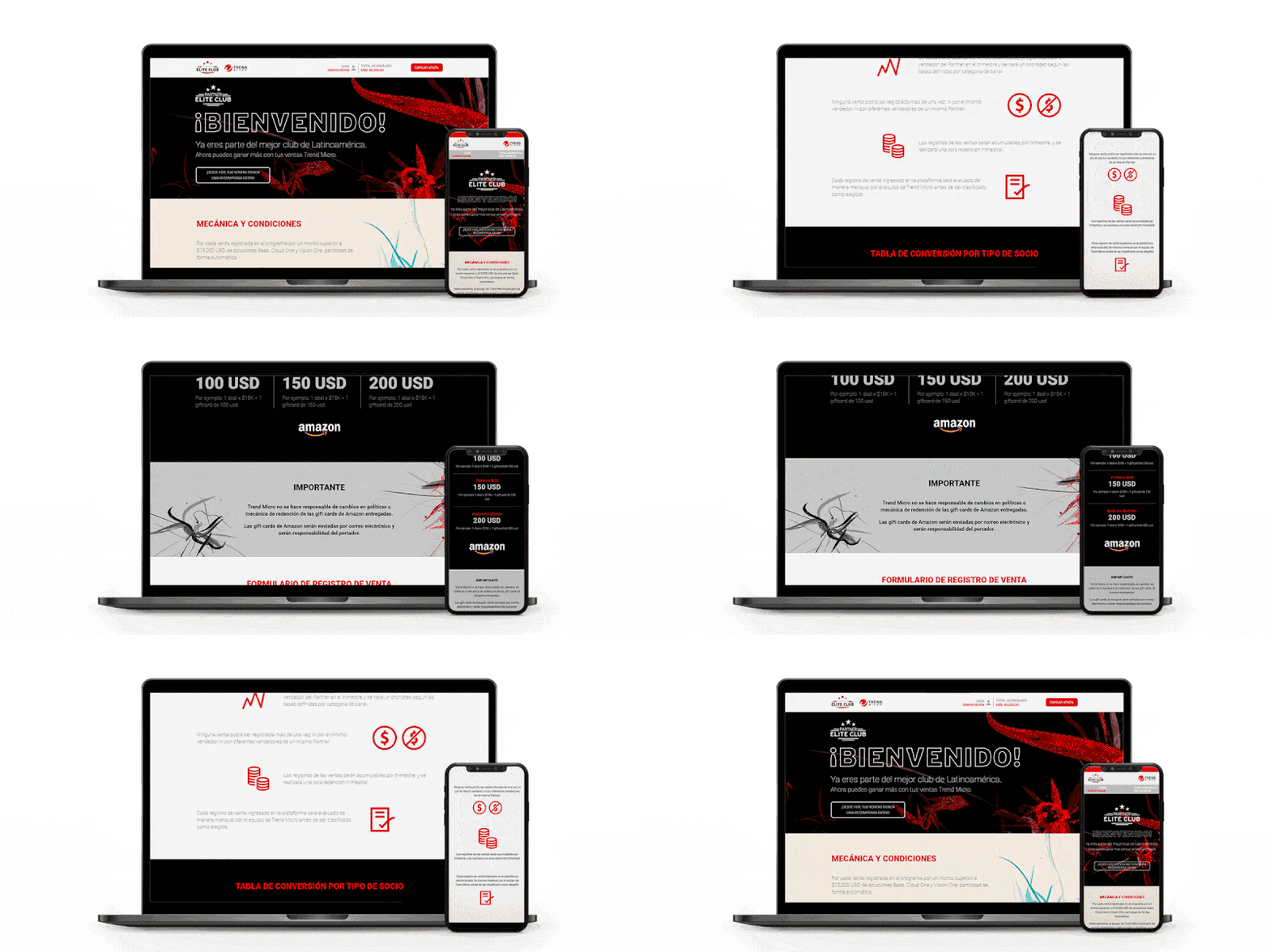
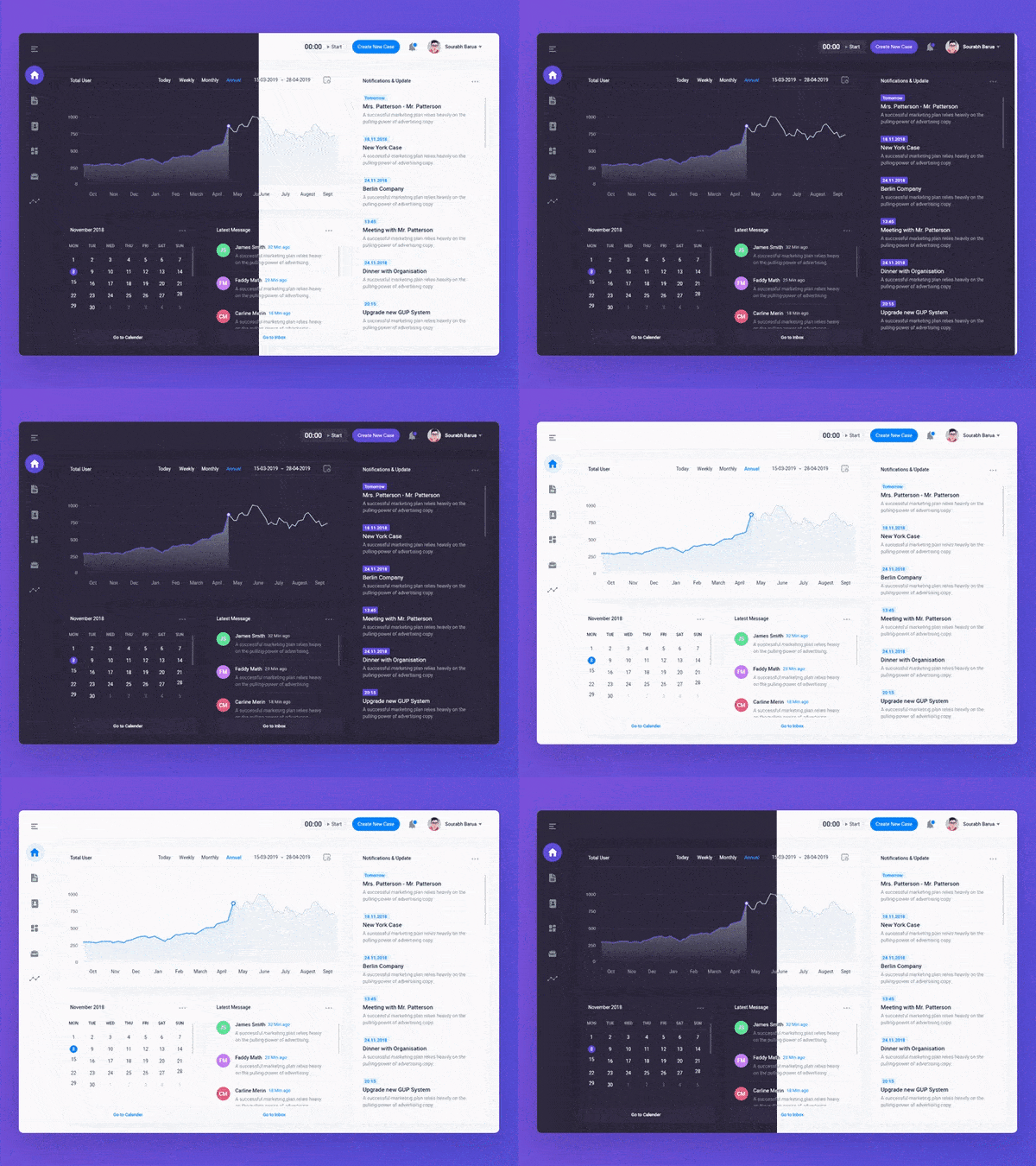
 In 2015, Google made an important announcement: that for the first time, it had received more searches from mobile devices than from desktops. Since then, the digital world has focused on the development of new concepts and strategies for mobile web design. Therefore, the mobile-first trend has revolutionized the creation of pages by prioritizing the mobile version website design and later adapting it to the desktop version.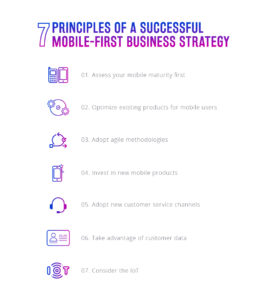




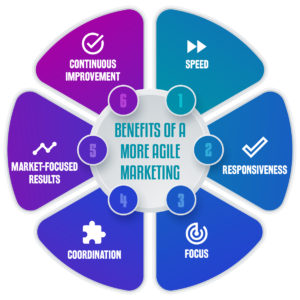
 A company in the financial sector in Ecuador decided to start its process of adopting agility with Isource Marketing, to improve its position in the financial sector. The entity started with the incorporation of the methodologies in its innovation team, forming agile teams that generated new products and services to meet the needs of its customers more effectively. However, they encountered an internal bottleneck: response times and quality of Marketing deliverables -a key step for the project- were not as expected. For this reason, they decided to hire our services with the aim of understanding and strategizing the current situation of the team by creating the ideal path in the adoption of agile marketing, which consisted of five phases: Identification and advice, solution, training to the Marketing area, adoption and evaluation/optimization.
 Therefore, in order to help plan a sales strategy, we will be sharing 8 ideas for the successful generation of leads in the B2B sector in 2021.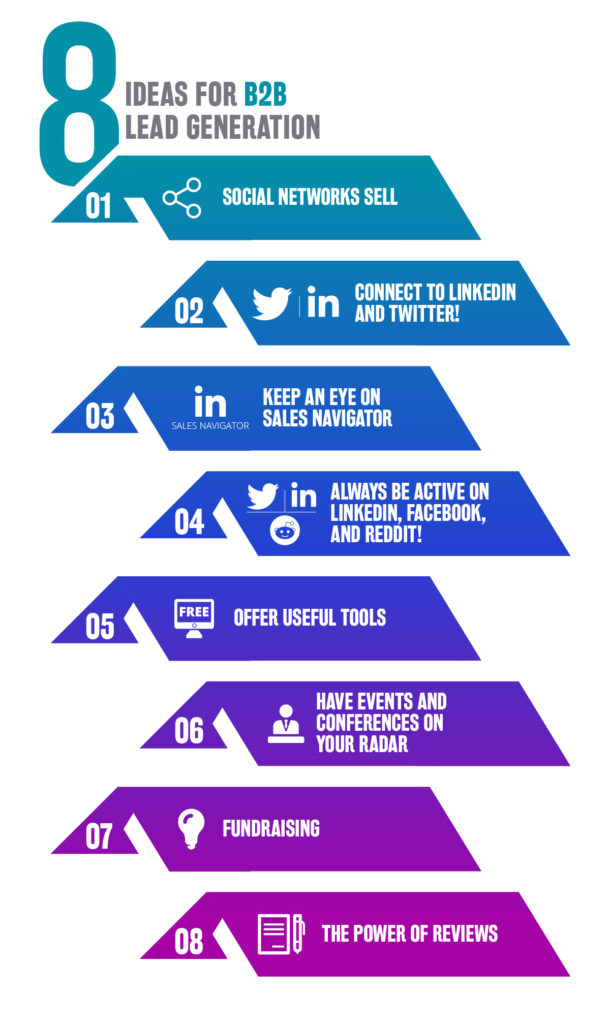

 It is no secret that strengthening a brand depends to a large extent on a solid communication strategy leveraged by public relations. Examples of this in the B2C sector are ample. Such is the case of companies like Apple, Samsung, Facebook and Tesla— which by their nature have their target audiences much closer to them. Therefore, it would be logical to think that if the target of a B2B company is not the end user, the strategy would change substantially.
 4. Get to know what the public reads.
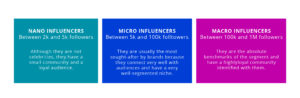
 Popular opinion matters. Recommendations made by influencers— known for their beauty, their fame or their expertise on a certain topic— generate trust. And brands know it. That’s why influencers have become fundamental pieces in digital marketing strategies.