

PR in a post-pandemic world: 7 predictions for 2022
 The arrival of COVID-19 accelerated digital transformation all while bringing a new way for businesses and the media to conduct public relations (PR), in which it has become critical to have more accurate information, faster responses to unforeseen situations, and a more strategic, comprehensive, and intelligent media monitoring.
The Institute for Public Relations (IPR) recently surveyed 300 communications executives and senior managers to understand how prepared companies are for this new post-pandemic scenario. It discovered that corporate executives understood the need for communication in dealing with the pandemic. More than three-quarters (81%) of respondents considered their company’s communication role in the face of COVID-19 to be “essential” or “very important”. While most firms have made every effort to prepare for crisis scenarios, just 30% felt their companies were “extremely” prepared to deal with a crisis, while 55% said they were “somewhat” prepared. However, over half of those surveyed (44%) said their crisis communications plan did not incorporate pandemic disease guidelines. Worse, 10% of respondents believed they don’t have a crisis communications plan.
Scenarios like this one demonstrate the need for strategic communication and public relations. In Brazil, for example, a clothing brand was harshly criticized after putting on sale four different models of face masks at exorbitant prices, which resulted in such negative repercussions that Procon, the country’s consumer protection agency, took action.
These “new” crises, created in an unexpected setting, need a distinct strategy that can only be carried out by a strong and efficient PR team. As a result, here are 7 reasons why PR became more essential during the COVID-19 pandemic.
- Ability to cope with a crisis
While many PR firms had a challenging 2020, corporate communications and PR teams worked tirelessly to adjust their messaging by giving interviews, developing crisis communications plans, and keeping their audiences calm. In this way, PR demonstrates not just their ability to navigate complex waters, but also how important they are.
- Profitability
With a few exceptions, including the health and entertainment industries, the pandemic has had a detrimental influence on most organizations’ marketing spending. So where did they redirect the money then? Many resorted to PR, advertising’s more profitable cousin, with the difficult challenge of persuading others that the investment was worthwhile.
- Trust
According to public relations communicators and journalists, the greatest strategy to overcome a crisis is to build trust which will improve the reputation of the organizations they work for. We saw a combination of the PR areas, marketing, social media, and corporate communication like never before. 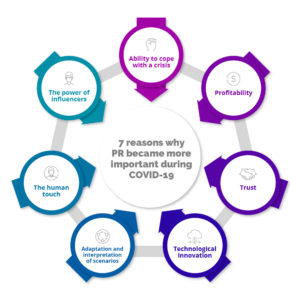
- Technological innovation
PR agencies have had to adapt, implementing technological tools to collect more information and monitor important issues, both in traditional media (radio, press, and television) and digital.
- Adaptation and interpretation of scenarios
The pandemic demonstrated that now more than ever, PR professionals must be able to quickly understand new scenarios. Understanding the situation of clients – in the case of agencies and accompanying them from a 360 point of view is essential to avoid making mistakes. The world is going at an ever faster speed and this accompaniment must be constant.
- The human touch
Consumers today demand and appreciate empathy, and PR professionals are committed to delivering it. People have become aware of the fragility of not just our existence, but also of our dependence and relationships with others at times of such uncertainty, which is why public relations is so important.
- The power of influencers
Due to the pandemic, influencers received a notable increase in interactions and engagement of their content. It is widely known that many traditional campaigns were stalled, delayed, or suspended, especially in the tourism and hotel sector. Therefore, it became necessary for brands to learn how to reinvent themselves to overcome this crisis and continue to grow.
The pandemic’s challenges, as well as the new scenarios that occurred as a result of it, have caused changes in organizations all across the world. The way many communicated and positioned themselves before their target audiences became outdated and had to change. Technology, strategic thinking, and adaptability are critical to communication in a post-COVID-19 world.
If you like this blog and would like assistance with PR, please contact us by clicking here. Our experts are ready to assist you with communication and press strategy and actions to increase visibility, position, and strengthen your brand’s reputation.








 Startups are a leading business model that drives innovation and economic growth worldwide. Each year, new types of products and services are created by startups. They serve as a great example of entrepreneurial creativity and ambition, as well as the emergence of ground-breaking concepts. Unfortunately, marketing is not one of their strong suits. And it’s understandable: most of them got their start not by writing case studies and sending emails but by building cutting-edge technology. Not to mention that traditionally, digital marketing was only available to large corporations in the B2B (business-to-business) and B2C (business-to-consumer) sectors.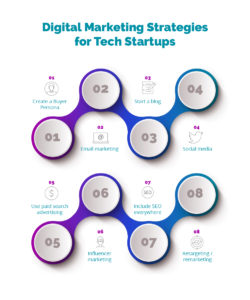

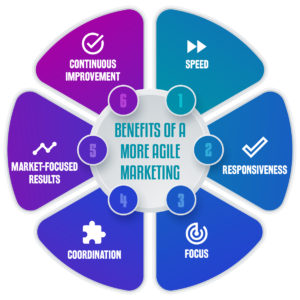
 A company in the financial sector in Ecuador decided to start its process of adopting agility with Isource Marketing, to improve its position in the financial sector. The entity started with the incorporation of the methodologies in its innovation team, forming agile teams that generated new products and services to meet the needs of its customers more effectively. However, they encountered an internal bottleneck: response times and quality of Marketing deliverables -a key step for the project- were not as expected. For this reason, they decided to hire our services with the aim of understanding and strategizing the current situation of the team by creating the ideal path in the adoption of agile marketing, which consisted of five phases: Identification and advice, solution, training to the Marketing area, adoption and evaluation/optimization.