

More Entries




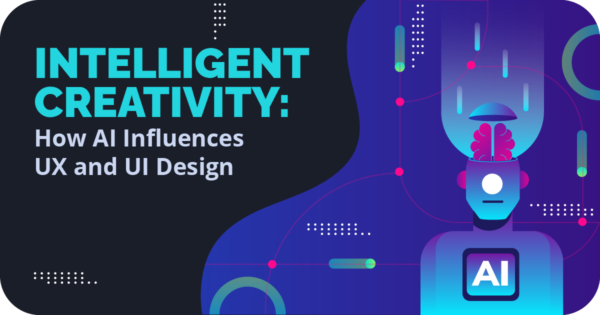
In recent years, Artificial Intelligence (AI) has revolutionized numerous processes, optimizing tasks and improving tools across various industries. Design is no exception. Both User Experience (UX) and User Interface (UI) have been transformed by the advanced capabilities AI offers. In this blog, we will explore how AI is influencing UX and UI design and how we can leverage its benefits to create successful user experiences.
UX and UI design are two crucial fields in digital design that work together to create successful and enjoyable products for users. While UX design focuses on the overall user experience, aiming to improve accessibility, satisfaction, and usability, UI design emphasizes the appearance and presentation of the product, ensuring it is visually appealing and coherent.
The importance of working on both lies in how they connect users with the product. Good UX design ensures that users can interact efficiently, facilitating navigation. Meanwhile, good UI design enhances the product’s aesthetics and user interaction, making the experience more enjoyable.
In the business world, a constant priority is to ensure customer satisfaction. In design, this responsibility is equally fundamental, especially in e-commerce and digital platforms that are frequently used. This turns the audience into vast amounts of data and expectations that designers must meet.
This is where Artificial Intelligence profoundly transforms both fields of digital design. By analyzing large volumes of data and learning from user behavior patterns, AI offers powerful tools that enable designers to create more personalized, efficient, and attractive experiences and interfaces. Next, we will explore the main benefits of AI in UX and UI design.
Personalization: Unique Experiences and Interfaces for Each User
AI can analyze large amounts of data to uniquely tailor the experience and interface. Algorithms enable applications and websites to automatically adapt to individual user preferences.
Platforms like Spotify adjust the user interface to highlight daily recommendations and personalized playlists based on the user’s listening history.
Design Automation: Efficiency and Creativity in UX and UI
AI-powered design tools allow designers to create more engaging and user-friendly content. Automation helps generate user flows and information architectures based on best practices and data, saving designers significant time.
Tools like Adobe XD with AI offer recommendations in wireframes and prototypes, while Figma uses AI to suggest design components and alignments, facilitating faster and more precise iterations.
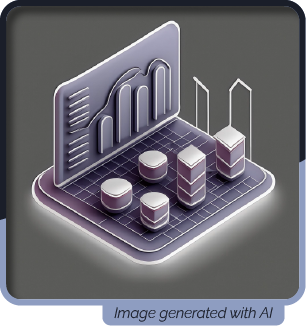
Predictive Analysis: Anticipating Needs and Improving Decision-Making
AI’s ability to predict user behavior is invaluable for designers. AI can efficiently process large amounts of user data, providing valuable insights into user behavior and preferences.
For example, e-commerce platforms like Amazon can predict which products a user is more likely to buy, adjusting navigation and offers accordingly.
Continuous Evaluation: Instant Feedback
Usability testing and visual effectiveness evaluation enhance the success of a design. AI can track performance and adjust the design, ensuring that user experiences are always optimized.
An AI-powered visual study, such as the virtual eye-tracking provided by Tobii Pro, analyzes how users interact with the interface. This helps identify problem areas and optimize visual design.
Conversational Interaction: Virtual Assistants and Chatbots
Chatbots and virtual assistants are a clear example of how AI improves user interaction, facilitates communication, and provides real-time information.
Siri and Alexa are examples of AI that, by providing quick and relevant responses, enhance the user experience and interaction with their environment.
Accessibility: Inclusive Design
AI tools can suggest improvements to make websites and applications more accessible, helping to create more inclusive products.
For example, Microsoft’s AI for Accessibility generates alternative descriptions for images and adjusts color contrast for users with visual impairments, enhancing interaction for all disabilities.
User Profiles: Emotion Analysis
AI can help create detailed user profiles to personalize the experience, analyzing emotions and needs to create interfaces that better resonate with users.
Adobe Sensei uses AI to analyze and optimize visual design, recommending the use of certain colors or font styles that evoke the desired emotions to deeply connect with users, increasing both satisfaction and engagement.
Now that you know the benefits AI offers, it’s time to integrate it into your CRM. Follow these simple steps to effectively adapt your company:

Uizard: Converts sketches and wireframes into interactive prototypes using AI. This tool is ideal for quickly creating prototypes and gathering user feedback.

Galileo AI: Automates design elements and visual content. Quickly creates prototypes, interfaces, and graphics, and can generate HTML and CSS code to implement the prototypes, facilitating the development process.

Synthetic Users: Builds synthetic users that simulate real user behavior in various situations. This makes it easier to test products and platforms in different scenarios.

Fronty: Automatically transforms design images into HTML and CSS code, enabling agile website creation and editing without coding. Quickly converts visual mockups into functional websites.

Adobe Firefly: Edits and creates images and graphics with greater detail than other AIs. Its advanced algorithms suggest elements that align with the project’s needs.

AI positively influences UX and UI design, from personalization and automation to predictive analysis and design optimization. It offers powerful tools that facilitate the creation of more intuitive, attractive, and user-centered experiences and interfaces. Additionally, it helps designers focus more on creativity and less on repetitive tasks.
At Isource Marketing, we firmly believe that businesses should take the latest trends to make their marketing actions more effective and boost their processes. Please, feel free to contact us for advice or quotes on marketing solutions, and take the bold step to enhance your B2B/B2C strategies with us.
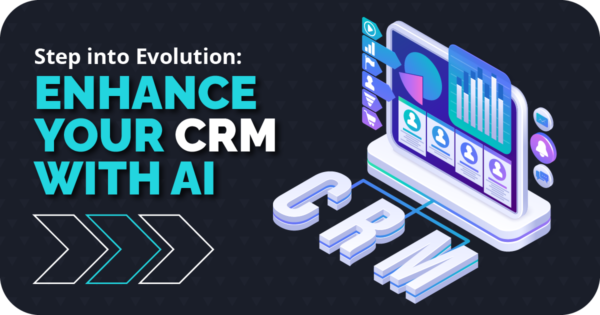
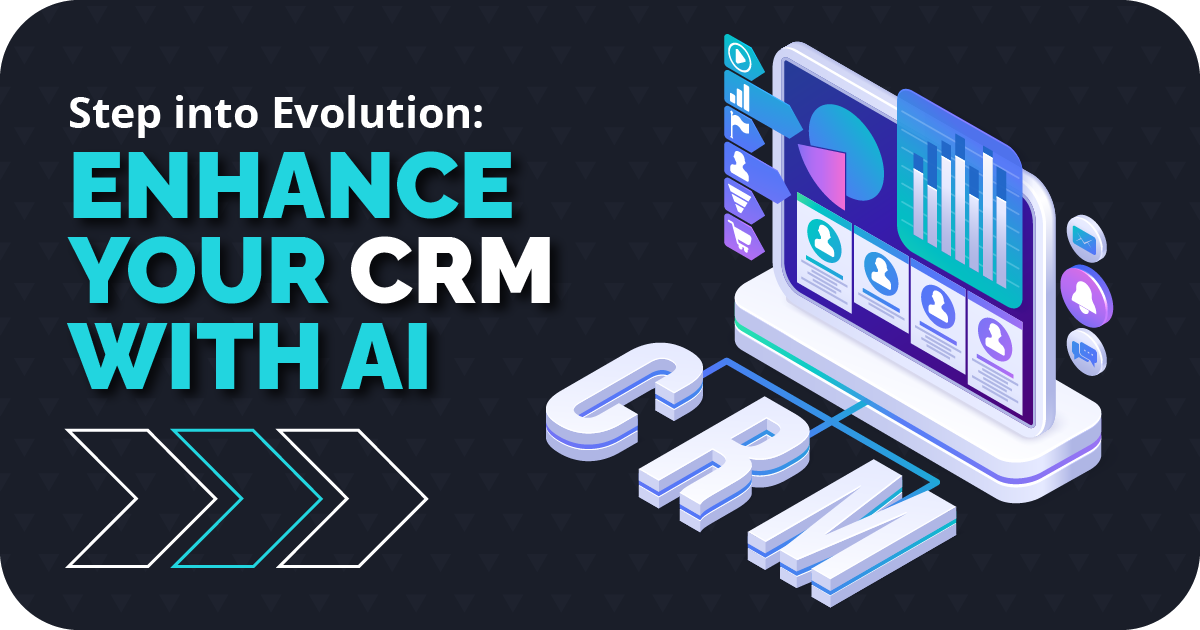
In the world of digital marketing, success increasingly depends on deeply understanding customer needs and behaviors. This is where CRM (Customer Relationship Management) is essential for building and maintaining strong relationships. However, we often take its functionality for granted and overlook the opportunities to optimize data usage more intelligently by integrating smart technologies. In this blog, we’ll show you how your CRM can evolve and improve its results with Artificial Intelligence

Customer Relationship Management (CRM) is the main source of data and strategies that achieve more organic marketing to drive the growth of every business. This, in turn, allows companies to offer a personalized experience, improve customer retention and loyalty by analyzing interactions and user data throughout their lifecycle.
Even so, with the massive amount of data generated daily, managing a CRM can be an overwhelming task. Traditional strategies, technologies, and practices can become overloaded, leading to less relevant results or a lack of prioritization of customer needs.
Advanced Analytics: AI can capture large volumes of CRM data to identify patterns and trends, enabling companies to make more informed decisions.
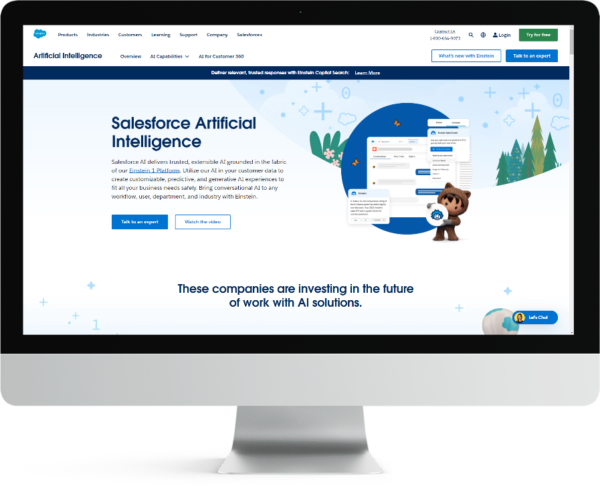
For example, Salesforce has created Einstein, an AI that uses advanced algorithms to analyze customer data and offer relevant solutions.
Task Automation: Automates complex tasks, such as customer segmentation and campaign personalization, improving efficiency and reducing response time.
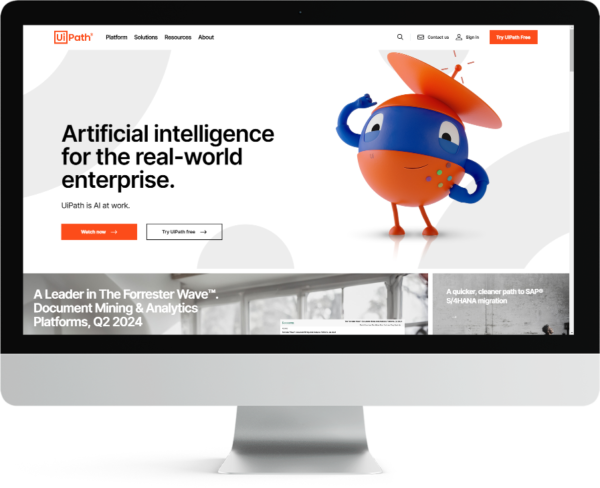
An ideal AI for improving operational efficiency is UiPath. This tool provides solutions that optimize repetitive administrative tasks, such as data entry and inventory management.
Behavior Prediction: Using advanced algorithms, AI can predict future customer behavior and needs. This helps companies anticipate and offer more relevant solutions.
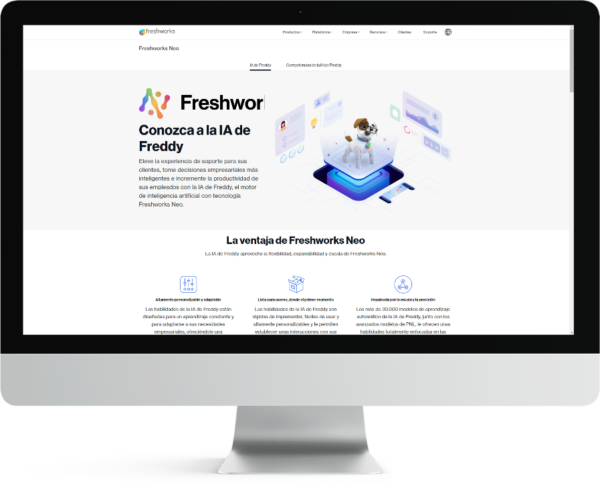
For this, there are CRM platforms that already integrate their own AI to maximize their tool’s potential. An example is Freddy AI, the AI tool from Freshworks, designed to accompany the customer journey at each stage and provide business and user-adapted recommendations.
Improving Customer Experience: AI-powered chatbots and virtual assistants can offer faster and more efficient customer service, enhancing the overall user experience.
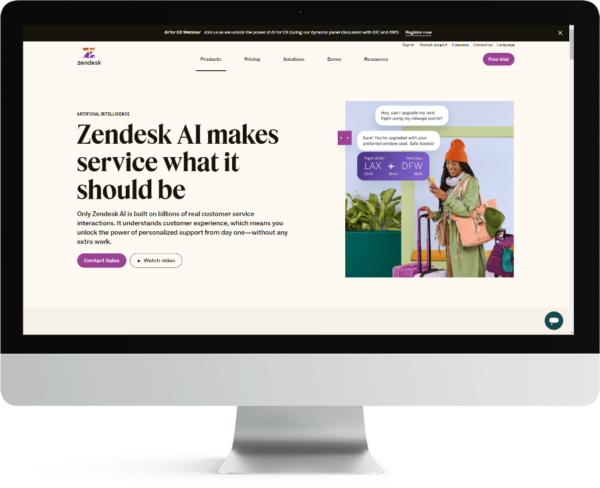
For this, you can use Zendesk, a platform that uses AI to improve customer service, offering automatic and efficient responses to common queries and directing requests to the sales team in real-time.
Now that you know the benefits AI offers, it’s time to integrate it into your CRM. Follow these simple steps to effectively adapt your company:
 1. Evaluate Needs
Identify the specific challenges you want to address with AI, such as improving lead generation, customer service, or sales projections.
 2. Choose the Right AI Tools
Select the AI tool that suits your needs or a CRM platform that is already AI-powered. You can now evaluate various AI solutions to customize your CRM and adapt it to what benefits you the most.
 3. Organize Your Information
The accuracy of the results provided by AI depends on how you deliver your information and the quality of your databases. Without an adequate structure, AI cannot guarantee good execution
 4. Adapt Your Platform to AI
Work with your IT team or your CRM provider to seamlessly integrate AI tools into your company’s system. You can also opt to acquire CRM software with built-in AI.
 5. Prepare Your Team
Train your organization on using these AI tools so they can adapt them to their reports and, in turn, be the ones providing data to the AI.
 6. Continuous Monitoring and Optimization
AI models are constantly improving. Monitor changes, updates, and new versions of AI and CRM platforms that optimize the results you seek.

We already know the great improvement opportunities that AI platforms offer for CRM and the ways to incorporate it for better customer personalization. However, we must not forget that it is an emerging technology and can make some errors that we must take into account:
Biased Data: The algorithm can produce inaccurate results if the data is biased or incomplete.
Lower Human Affinity: Responses can fail in interaction with customers and negatively impact their experiences.
Cybersecurity Risks: With AI tools, there is a risk of data breaches or cyberattacks, so it is important to handle it with caution.
CRM is essential for marketing success, as it allows companies to better understand their customers and offer a more personalized experience. When the power of CRM is combined with the capabilities of AI, companies can further optimize their marketing strategies and evolve their results to be more efficient, proactive, and with greater customer satisfaction and loyalty.
At Isource Marketing, we firmly believe that businesses should take the latest trends to make their marketing actions more effective and boost their processes. Please, feel free to contact us for advice or quotes on marketing solutions, and take the bold step to enhance your B2B/B2C strategies with us.