




More Entries
 What is augmented reality? It is a technology resource that provides users with interactive experiences by combining a virtual component to a real physical environment with the use of digital devices. Although its origins date back to the early 20th century and its term was originally created in the early 1990s, it is now embedded in everyone’s lives and continues to progress at a fast pace.
We use augmented reality on a regular basis, and it is present in our everyday lives primarily for entertainment purposes. However, companies utilize AR to improve sales, enhance product or service presentation, train employees, and even analyze statistical data. Click on this link to visit our blog, where we discuss the benefits of augmented reality, virtual reality, and extended reality in the corporate sector.
In this blog, we will examine the operations and benefits of augmented reality in social media. Before we begin, let’s look at some numbers. According to Statista, the number of social media users worldwide climbed from 1.22 billion to 3.09 billion between 2011 and 2021. According to eMarketer, in 2020, 30% of users interacted with augmented reality content on social networks monthly. In 2021, that number was predicted to grow 7.2% and reach a total of 46.9 million users. Eye-opening, right?
These statistics demonstrate how social networking through mobile devices has become a part of our everyday lives, making it an important platform for developing immersive augmented reality experiences. There was speculation that Facebook had purchased Oculus in order to become the next large social network. Although significant progress has been made in this direction – remember the last push of Metaverse: Horizon Worlds – there are already communities, applications, and social events for virtual reality, with which augmented reality is without a doubt the number one technology for immersive social interaction.
The most significant advantage it provides in social networks is its distribution, which is far simpler and more widespread than virtual reality. It is compatible with a large number of smartphones on the market. The Snapchat filters, which have over 300 million active users, and Instagram filters, which have 1.4 billion active users, are the most visible evidence of its value.
As a result of the abovementioned, we can conclude that companies from all sectors, both B2C and B2B, have enormous potential to promote their products and services on social networks and platforms that utilize augmented reality.
So let’s take a look at the 5 benefits of using this awesome immersive social media technology in your next social media marketing strategy:
Augmented reality merges the virtual and real worlds, dramatically increasing user experience and, as a result, improving consumer satisfaction with a product or service.
According to The Drum, augmented reality can keep consumers’ attention for up to 85 seconds. Additionally, you may enhance your purchase click-through rate by 33% and your engagement rate by 20%. This suggests that, regardless of the quality of the campaign, Internet users are likely to pay attention to and engage with augmented reality experiences.
Augmented reality may be utilized to increase indirect sales and boost brand awareness. It contains playful, innovative, and surprising features that, when well executed, may create a pleasant atmosphere around the brand, product, or company itself. A well-designed augmented reality brand experience might just get people talking about a brand and associate it with positive emotions like joy and excitement.
Increase brand engagement by providing consumers with new, immersive experiences that hold their interest longer than a static image or text. Additionally, augmented reality allows for interaction with products and advertisements at various stages of the consumer experience. It may be used at the pre-sale, point-of-sale, and post-sale phases. It may also be utilized in gamification and branding applications to engage consumers.
Instead of promoting a conventional advertisement, brands can have their customers participate in a game centered around a product for a certain period of time. Consumers would be able to touch and rotate objects while an indirect promotional message is communicated and no specific purchase action is pushed. On the contrary: augmented reality aims to provide a preview of the product or service so that the potential customer may use the experience to learn about their qualities.
AR based on projection

AR based on recognition

AR based on location

AR based on superposition

AR based on schemes

Conclusion: It is clear that augmented reality is here to stay on social media. Its ongoing growth and competition among the various platforms that develop it have meant that consumers and businesses alike benefit from it.
And, as a Digital Marketing and Communication agency committed to the development of immersive experiences, Isource Marketing has created a variety of Instagram and Snapchat filters as well as experiences. Here are two that we really like:

HalloSource is a frightening filter that we created for Halloween 2021. It is a fun experience in which the user may choose their preferred mask and give a great terrifying scream with it.

Valentine’s Day is rocking! Long live love! Also, long live rock! To celebrate Valentine’s Day, we put on a rock performance using this filter.
Are you ready to explore the world of augmented reality? At Isource Marketing, we have experts in the development of apps for different viewers and platforms, not just for augmented reality, but also for virtual and extended reality. Contact us at https://old.web.isource.us/#contact!
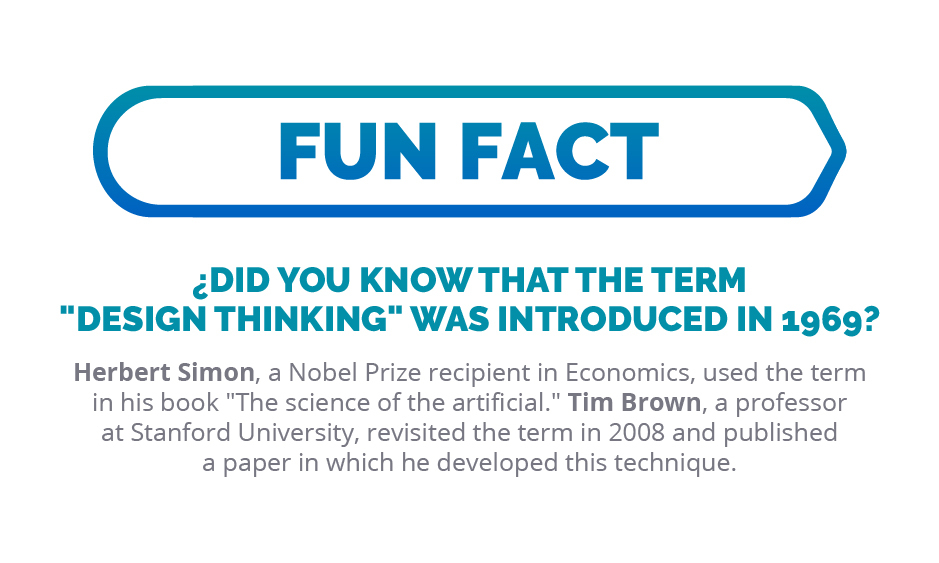
 Design thinking is an iterative process that utilizes a set of design techniques to generate, develop, and test new ideas in order to create products and services that are technologically possible and financially viable.
It is based on the generation of empathy, by understanding the problems, needs and desires of users, as well as teamwork, since it values the contribution of various collaborators who participate in the process. It also promotes the playful side, that is, enjoying the process itself and fostering the ease required for the process to be effective.
Why should you apply design thinking in your business?
More and more Business to Business (B2B) companies recognize the value of design thinking, and we are frequently asked by current and prospective clients how to incorporate this technique into their internal processes in order to better understand their clients’ needs and enhance sales.
According to some research, team members that utilize design thinking outperform those that use other innovative approaches, particularly in terms of relevance and viability, since it places the human being in the eye of the hurricane, which is critical for any business.
There are several techniques for design thinking. One of them, perhaps the most used, is SCAMPER, an acronym for Substitute, Combine, Adapt, Modify, Propose other uses, Eliminate and Reorganize. The Customer Journey also stands out, although it is not a creative technique, it appeals to the journey made by the consumer in the purchase cycle, which allows information about their habits to be obtained. . Lastly, there is the Mind Map, a visual technique that manages to stimulate neuronal connections, giving rise to innovative and surprising ideas.
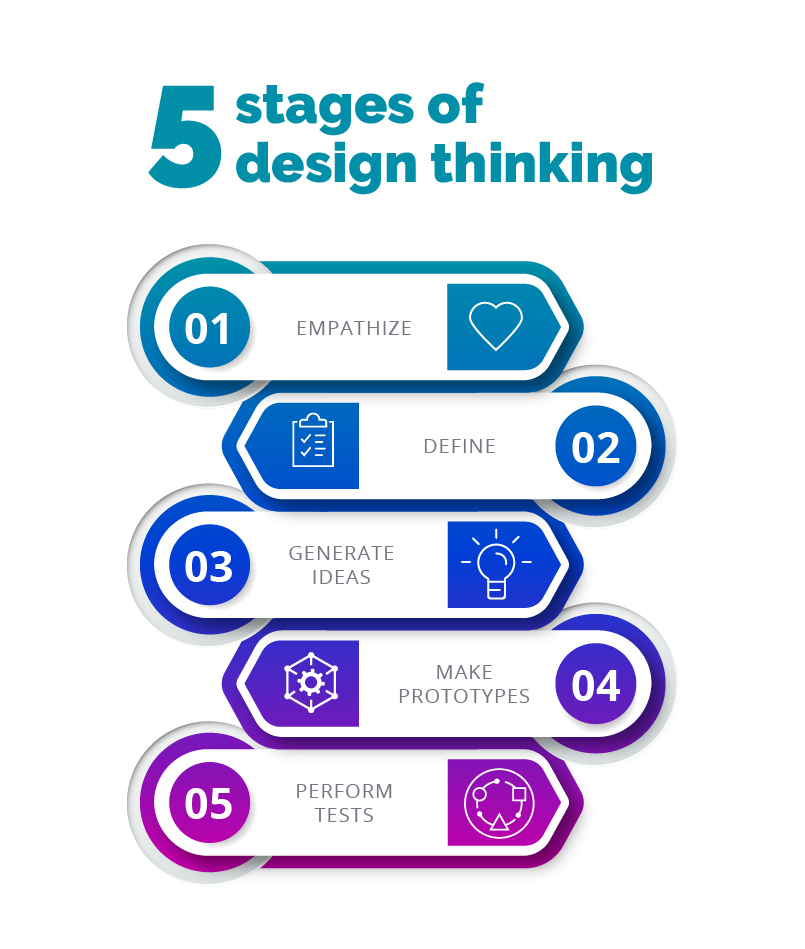
5 stages of design thinking:
1. Empathize: It is about understanding the problem that the client needs to solve. This phase usually begins with a user or consumer research.
2. Define: It consists of identifying and defining the needs and challenges that we face.
3. Generate ideas: Thinking outside the box is crucial at this stage, in order to seek alternative ways of looking at the problem and identify innovative solutions.
4. Make prototypes: We begin by determining the best solution for each challenge. We must build or design very primitive versions of the final solution.
5. Perform tests: The evaluators thoroughly test and review the proposed sketches or solutions. It will revert to previous stages if necessary to make modifications and improvements.
In what other processes does it help to implement design thinking?
1. It allows for the improvement and growth of other stages of the sales strategy. Because it encourages innovation and creativity and results in more relevant value propositions for customers.
2. The current digital dynamic encourages feedback and insight discovery. It is now feasible to communicate directly with customers through technical means, such as forms, email marketing campaigns, and social media.
3. Encourage teamwork. Involving individuals from all positions in the development of solutions boosts motivation.
4. Optimize costs. It allows low-cost implementations before making decisions and making larger investments.
As you can see from this blog, the design thinking process may assist you in developing successful solutions for your projects. And, as a communication and digital marketing agency, Isource Marketing is here to support you. Do not hesitate to contact us by clicking here: https://old.web.isource.us/#contact
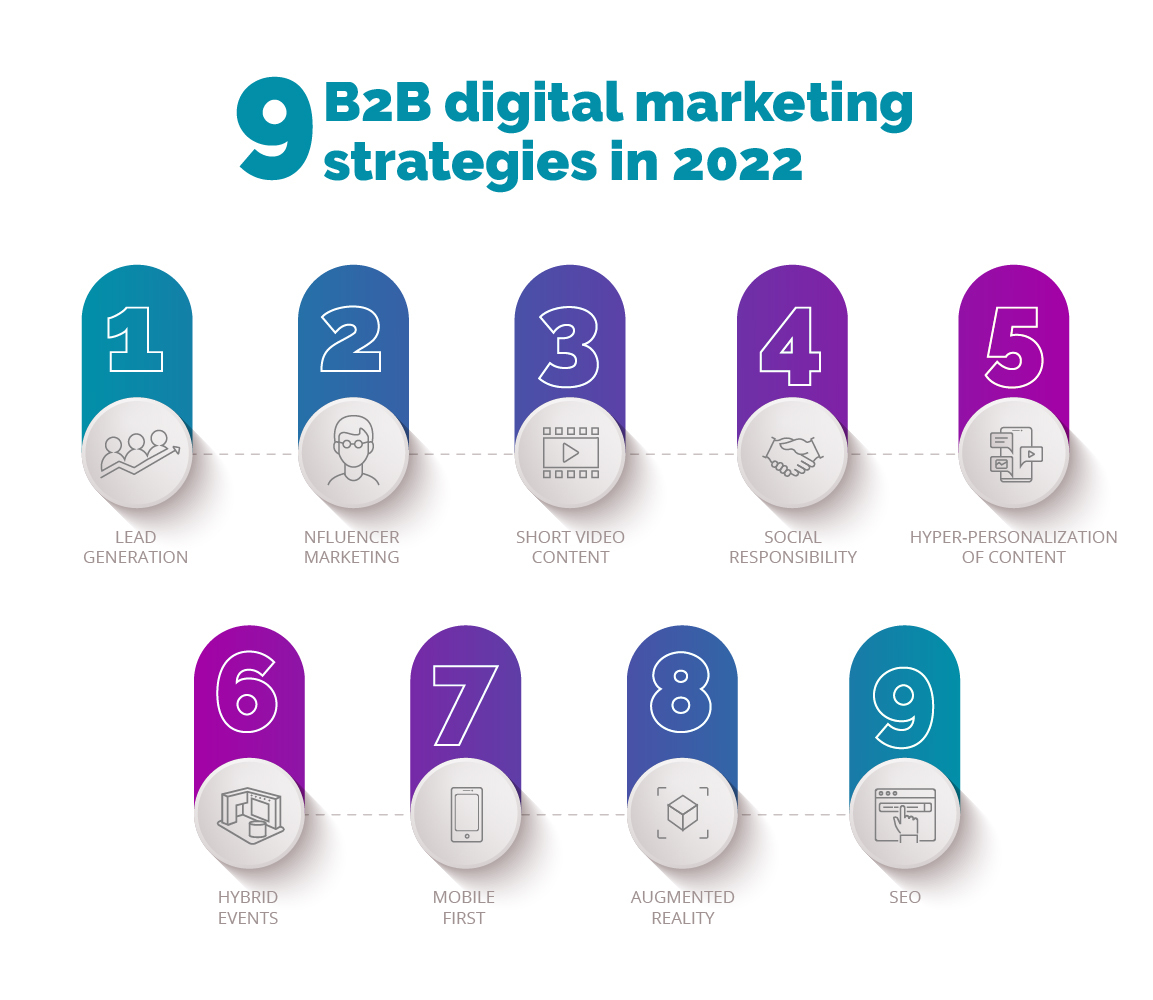
 2020 and 2021 were challenging years for society and the global economy, but there is no denying the opportunities created by the digital revolution’s acceleration, particularly for enterprises in the Business to Business (B2B) sector and their sales and marketing areas. According to a McKinsey survey, when the COVID-19 pandemic began, more than three-quarters of vendors and buyers preferred digital access and remote human interaction over face-to-face interaction.
By 2022, digital sales will have surpassed physical sales, making it essential to prepare for online sales and invest in digital assets such as websites, content creation, social media marketing, etc. Based on this assertion, here are nine digital marketing trends based on the last 18 months of significant change, and challenges for the B2B industry.
1. Lead Generation: Involves publishing value-added content and building loyal communities, optimizing resources based on audience preferences, and personalizing products and messages while keeping metric analysis in mind; all with the goal of guiding prospects through the suitable journey to obtain qualified leads, which is, at the end of the day, one of the primary responsibilities of marketing.
2. Influencer Marketing: is a strategy that is growing and is already positioned in the B2B market with the goal of increasing brand awareness, recall, and positioning. From micro to macro-influencers, depending on the sector, budget, and objectives, a strategy of this magnitude may be quite beneficial. We invite you to read this article: Everything You Need to Know About Influencer Marketing
3. Short video content for social media: In the last two years, content has evolved to short video formats, which, in addition to generating more engagement than static content, communicates essential and appealing messages to the target audience while making the user feel more connected to the brand. TikTok, Instagram, and YouTube are the ideal social platforms for this.Social
4. Responsibility: Corporate values and brand trustworthiness are becoming more and more relevant to audiences, as awareness of the social and cultural decline in different areas of business grows every day. So investment and transparent communication in this area become more important when choosing a brand to do B2B business. An example of this is the Kaspersky Global Transparency Initiative, the world leader in cybersecurity solutions and services and one of our main clients.
5. Hyper-personalization of content: In the face of content saturation, the necessity to provide material to consumers based on their requirements in order to boost engagement and virality is becoming increasingly important.
6. Hybrid events: It is clear that the pandemic forced everyone to go digital, but as the capacity of physical spaces returns to 90% events will revert to being in person while still having a virtual component. QR codes, which allow individuals to go from a real location to a digital one, are one of the most widely used methods for creating these hybrid experiences.
7. Mobile First: Consumers are increasingly using their cell phones to make informed decisions before making a purchase. According to a study by Smart Insights, 80% of B2B buyers use their cell phones at work and more than 60 percent believe they have played an important role in their most recent purchases.
8. Augmented Reality: This is an emerging technology that has gained more strength than virtual reality because it is more accessible to the audience and its reach and impact are greater. The use of AR in marketing strategies allows brands to generate innovative experiences that stand out from their competitors. Read: It’s time to enter the world of immersive technologies!
9. SEO: 2022 is the year for businesses who haven’t prioritized SEO as a primary search engine optimization strategy to do so, with the objective of finding a balance between paid and organic reach. Google’s newest improvements, which incorporate artificial intelligence and machine learning, pose a significant threat that should not be overlooked.
 We hope you found our review of Digital Marketing Trends for 2022 beneficial; at the end of the day, it is part of our expertise in being the strategic B2B partner you need in this challenging year. At Isource Marketing we specialize in developing customized marketing strategies according to the needs of your business and adapted to the market. You can contact us by clicking here.
 The millennial generation (born between 1981 and 1996) is the first to come of age in the new century and is expected to be a key economic force in the decades ahead. According to Gallup, it is the largest labor force in the United States, representing 73 million people. To the surprise of many baby boomers, it is predicted that by 2025, millennials will make up 75 percent of the global workforce. Shocking right?
Millennials are the first generation to be born in the digital age. This generation is well recognized for rejecting traditional lifestyles such as marriage and having a traditional family. In comparison to past generations, they tend to emancipate from occupations more rapidly. Millennials are communicators, multitaskers, nonconformists who value their free time and want to live in a better environment, and their consumption patterns are heavily impacted by technology. The great majority of them, without a doubt, own a smartphone, through which they carry out a substantial portion of their activities, such as playing, shopping, learning, working, and interacting with the world.
In this article, we will discuss how the Business to Business (B2B) sector can incorporate functional design elements into their digital marketing strategies to engage this target audience, given that millennials actively influence purchasing decisions and consumption habits. According to the organization B2B International, 73 percent of individuals who are employed already have an active role in the company’s acquisition of products or services.
One of the aspects that millennials take into account the most is the experience with the brand. They are twice as likely to abandon a brand forever if they don’t like it and twice as likely to recommend it to others if they had a great experience.
When it comes to advertising content, millennials are more skeptical than other generations. They look at advertising with caution, including content produced by influencers. However, they do trust content created by other users. Not to mention that their favorite place to consume it is on social networks.
Taking these factors into account, businesses that want to target this generation must focus on the millennial customer experience, which includes listening to their viewpoint, recognizing weak areas, and working to solve them innovatively. It is a collaborative effort that requires integrated, flexible, viral, and credible marketing strategies. These strategies should focus on user experience (UX), which seeks to meet the satisfaction and needs of users in terms of information architecture, interaction, usability, prototyping, and visual design.
As a result, we will share six digital visual design trends that, in our opinion, are the most powerful for a B2B organization to make millennials fall in love with the ever-demanding millennials:
1 Semi-flat design
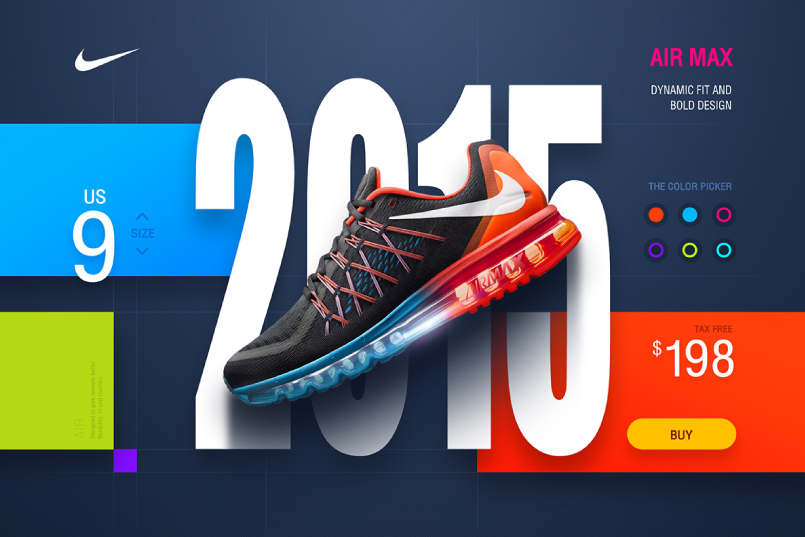
In addition to flat design, it combines shadows and gradients into the vector design, which adds depth without sacrificing the minimalist qualities.
2. 3D

Without a doubt, 3D has been one of the most innovative tools in graphic design in recent years. With the rapid evolution of modeling software, there are more possibilities to create incredibly realistic-looking textures and shapes.
Below, you will find the redesign of one of our top clients: NETGEAR Insight’s website, which showcases the entire business product line as a single ecosystem managed from the Insight platform.
3. Gradients
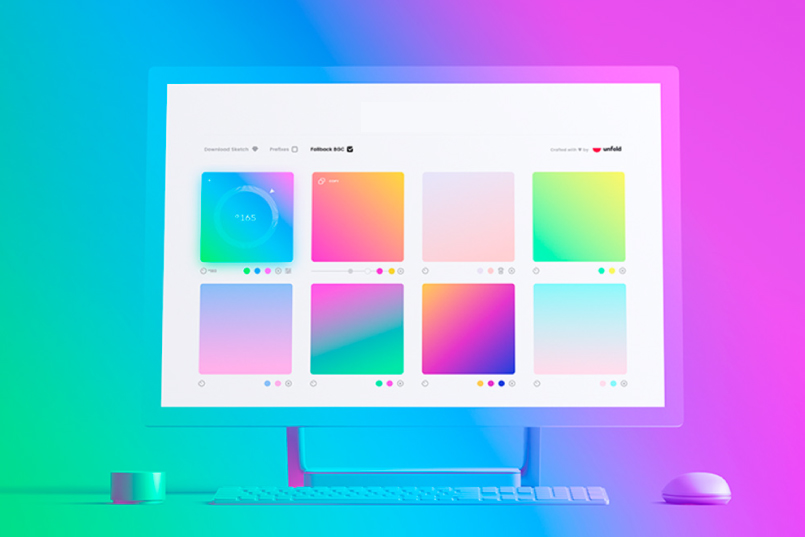
Instagram has been a pioneer in this movement for a few years. Creating a logo using gradients was unfathomable in the days of paper and print, but they are increasingly being included in the digital landscape. Today, this approach is frequently included in the branding of major corporations.
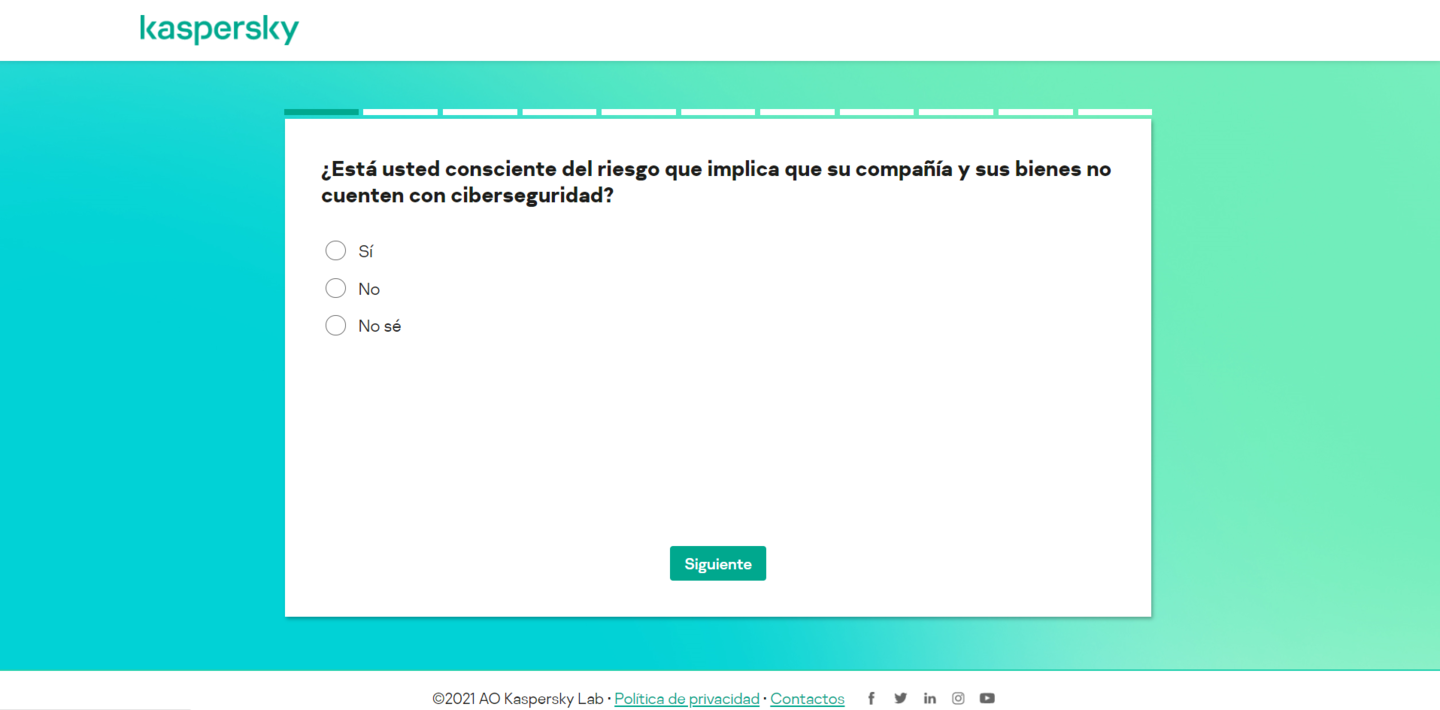
Another example: Security Assessment Online, which is a security level self-assessment landing page for companies, which aims to showcase the solutions that best fit the customer’s needs.
4. Cinemagraph

Created back in 2017, cinemagraphs combine static and moving images, which allows for more realism and provides a sensation that cannot be achieved with a simple image.
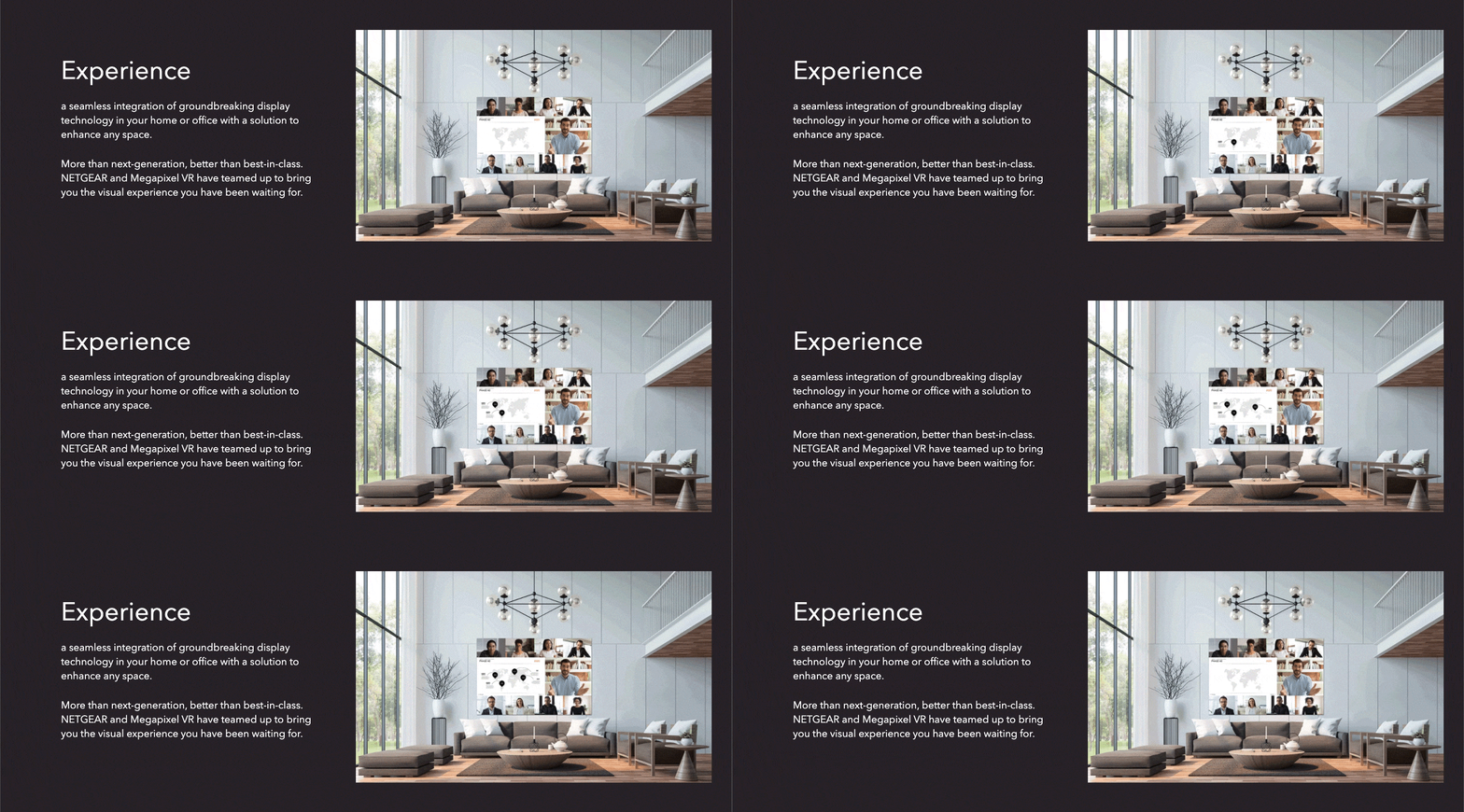
Another example of Cinemagraphs is from NETGEAR’s landing page with its partner MEGAPIXEL that shows how ProAV switches help deliver high-quality graphics on Full HD displays in high-end spaces.
5. Colors

Calm blues stand out, conveying peace and tranquility. In a chaotic world like ours, earth tones create a mental connection with the environment and generate pleasant emotions. Citrus hues are associated with freshness and optimism, while the contrast of black and white stands out more than the market’s oversaturated style of striking tones.
6. Retrofuturism

A popular style in 2021 that was created in the 1980s when many imagined various elements of the future and was highly used, hence the name that references the future while still mentioning retro to acknowledge the past. It is recognized by the use of geometric forms and neon colors.
We hope you enjoyed this review of how companies must fully commit to the renewal of their products, services, brand image, marketing strategies, communication, and advertising content if they don’t want to lose the vote of the most influential generation: the millennials. The section on visuals discussed, when applied properly, will make your business plan successful within the demanding generation. At Isource Marketing, we have a highly qualified team of designers, illustrators, and creators ready to help you take your brand to the next level. Contact us now by clicking here: https://old.web.isource.us/#contact
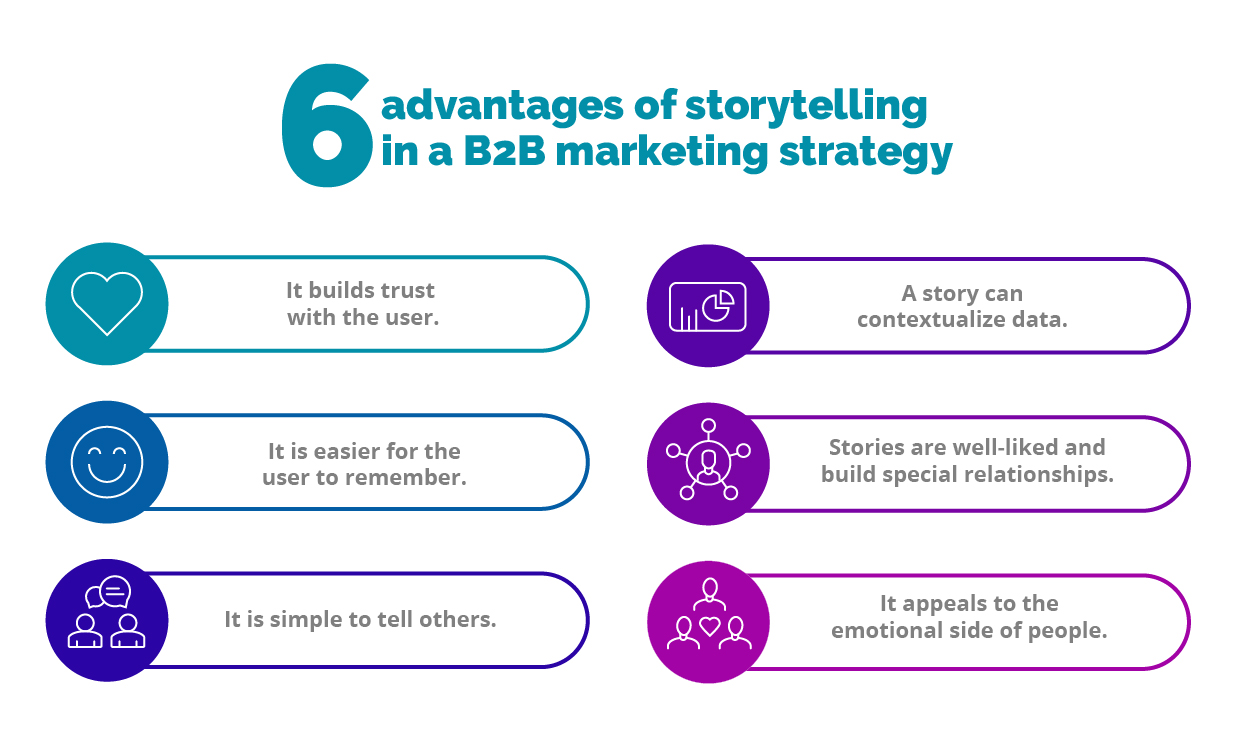
 Who doesn’t like stories? We live in a world surrounded by them; in fact, our life is a story in itself. Companies have recognized the potential storytelling can have and are utilizing it to captivate their consumers and potential customers. What exactly is it, and why does it hold so much opportunity in the Business-to-Business (B2B) world? The solutions to these questions may be found throughout this blog.
Storytelling, in its purest form, is the art of telling, creating, and adapting stories in situations with a beginning, middle, and end, with the objective of communicating messages from an emotional perspective.
In content marketing, it is a powerful tool because it allows you to tell stories about a brand and its products, and while it has been used for many years by companies in the B2C sector, one may ask if it can make a positive impact in the B2B world, whose buyers tend to be driven by logic, evidence, and facts? The answer is simple: absolutely, because it has been proven that even in the coldest industries, the transmission of emotional, compelling, and entertaining stories has unimaginable effects on target audiences.
To help you understand it a bit better, here are three examples of how three B2B companies used storytelling to get their message across from a human perspective:
This hilarious Adobe Marketing Cloud ad conveys the value of the marketed product without boring the viewer at all. The video begins in an office with employees dealing with an unexplainable rise in orders and doing everything they can to complete them. The ad concludes with a touching and humorous visual that should not be missed!
Slack collaborated with Sandwich Productions to create the 2014 film “So Yeah, We Tried Slack.” From the perspective of the production company’s employees, the video depicts the widespread acceptance of today’s favorite corporate communications platform. It’s a clever idea that’s worth watching and analyzing.
Hootsuite discusses why certain organizations aren’t successful on social media in this animated video in a clear and honest tone. It then outlines how it may assist companies in resolving the challenge.
Did you like watching videos? Now, we’ll provide you with six tips on boosting your marketing campaigns using the art of storytelling.
It’s the first step in telling a story, and to do that you have to ask yourself:
Will the audience be familiar with what I want to tell?
What do they want to know?
What challenges would my readers face without my product/service?
When you understand who they are and why they require your product/service, you will be able to interpret how to convey a clear message that will enhance the engagement of your campaigns.
Good storytelling has a logical thread, i.e. a beginning, a middle, and an end, which makes the story easier to understand. Consider the following elements:
The protagonist: the customer.
The antagonist: the challenge.
The mission: the journey to overcome the challenge.
The execution: the solution to the challenge.
The climax: the result.
It’s critical to understand what people want to hear and where they want to hear it. Do some research to understand your audience’s challenges, which will lead you to the best platform for telling the story. For example, if you find that people love short videos, you may create and share animations with amusing characters on social media.
 Harness the power of gamification
We like this one since we at Isource are specialists in the execution of immersive experiences and the positive outcomes they generate. By gamifying your storytelling, you provide your audiences unimaginable power with quizzes, games, puzzles, and countless other resources for them to learn what your product or service accomplishes, for example.
It enables the customer to control the story and showcase his or her own experience, humanizing it through case studies, success stories, testimonials, etc.
Numbers and narratives are both required. In fact, stories and statistics are strongly intertwined. One aids in the establishment of an emotional connection, while the other fosters trust in the realities of the situation.
The storytelling field has no boundaries, and we are confident that your company has a variety of elements to create effective and empathetic stories and, as a result, communication pieces that captivate your audiences. And we at Isource Marketing are here to help you since we have designers and copywriters that have been trained to do so. Interested in contacting us or scheduling a call? Find us here: https://old.web.isource.us/#contact We look forward to meeting you!
 The arrival of COVID-19 accelerated digital transformation all while bringing a new way for businesses and the media to conduct public relations (PR), in which it has become critical to have more accurate information, faster responses to unforeseen situations, and a more strategic, comprehensive, and intelligent media monitoring.
The Institute for Public Relations (IPR) recently surveyed 300 communications executives and senior managers to understand how prepared companies are for this new post-pandemic scenario. It discovered that corporate executives understood the need for communication in dealing with the pandemic. More than three-quarters (81%) of respondents considered their company’s communication role in the face of COVID-19 to be “essential” or “very important”. While most firms have made every effort to prepare for crisis scenarios, just 30% felt their companies were “extremely” prepared to deal with a crisis, while 55% said they were “somewhat” prepared. However, over half of those surveyed (44%) said their crisis communications plan did not incorporate pandemic disease guidelines. Worse, 10% of respondents believed they don’t have a crisis communications plan.
Scenarios like this one demonstrate the need for strategic communication and public relations. In Brazil, for example, a clothing brand was harshly criticized after putting on sale four different models of face masks at exorbitant prices, which resulted in such negative repercussions that Procon, the country’s consumer protection agency, took action.
These “new” crises, created in an unexpected setting, need a distinct strategy that can only be carried out by a strong and efficient PR team. As a result, here are 7 reasons why PR became more essential during the COVID-19 pandemic.
While many PR firms had a challenging 2020, corporate communications and PR teams worked tirelessly to adjust their messaging by giving interviews, developing crisis communications plans, and keeping their audiences calm. In this way, PR demonstrates not just their ability to navigate complex waters, but also how important they are.
With a few exceptions, including the health and entertainment industries, the pandemic has had a detrimental influence on most organizations’ marketing spending. So where did they redirect the money then? Many resorted to PR, advertising’s more profitable cousin, with the difficult challenge of persuading others that the investment was worthwhile.
According to public relations communicators and journalists, the greatest strategy to overcome a crisis is to build trust which will improve the reputation of the organizations they work for. We saw a combination of the PR areas, marketing, social media, and corporate communication like never before. 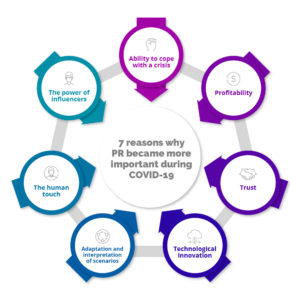
PR agencies have had to adapt, implementing technological tools to collect more information and monitor important issues, both in traditional media (radio, press, and television) and digital.
The pandemic demonstrated that now more than ever, PR professionals must be able to quickly understand new scenarios. Understanding the situation of clients – in the case of agencies and accompanying them from a 360 point of view is essential to avoid making mistakes. The world is going at an ever faster speed and this accompaniment must be constant.
Consumers today demand and appreciate empathy, and PR professionals are committed to delivering it. People have become aware of the fragility of not just our existence, but also of our dependence and relationships with others at times of such uncertainty, which is why public relations is so important.
Due to the pandemic, influencers received a notable increase in interactions and engagement of their content. It is widely known that many traditional campaigns were stalled, delayed, or suspended, especially in the tourism and hotel sector. Therefore, it became necessary for brands to learn how to reinvent themselves to overcome this crisis and continue to grow.
The pandemic’s challenges, as well as the new scenarios that occurred as a result of it, have caused changes in organizations all across the world. The way many communicated and positioned themselves before their target audiences became outdated and had to change. Technology, strategic thinking, and adaptability are critical to communication in a post-COVID-19 world.
If you like this blog and would like assistance with PR, please contact us by clicking here. Our experts are ready to assist you with communication and press strategy and actions to increase visibility, position, and strengthen your brand’s reputation.

It’s the most frightening time of year ?, and Isource Marketing couldn’t let Halloween pass us by without creating this wonderful Augmented Reality (AR) filter with 5 different characters.

Look no further, scan the QR code below and have a spooky good time becoming a zombie, mummy or droid amongst others! ??? Click here to find the filter on Instagram.

If you’re ready to delve into the worlds of AR, Virtual Reality (VR), and Extended Reality (XR), we’re here to help guide you! At Isource Marketing, we have a team that specializes in the production of immersive experiences. Please contact us by clicking here!
 Startups are a leading business model that drives innovation and economic growth worldwide. Each year, new types of products and services are created by startups. They serve as a great example of entrepreneurial creativity and ambition, as well as the emergence of ground-breaking concepts. Unfortunately, marketing is not one of their strong suits. And it’s understandable: most of them got their start not by writing case studies and sending emails but by building cutting-edge technology. Not to mention that traditionally, digital marketing was only available to large corporations in the B2B (business-to-business) and B2C (business-to-consumer) sectors.
However, there is some good news. According to First Site Guide, 7.1% of the startups in the world operate in the fintech industry. Followed by life sciences and healthcare with 6.8%, artificial intelligence with 5.0%, gaming 4.7%, adtech 3.3%, and edtech with 2.8%. Modern startups are drawn to the internet and digital technology, despite the lack of precise industry distribution data. As a result, a strong online marketing plan is essential for every business hoping to achieve success.
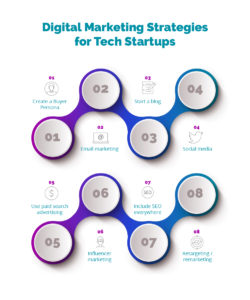
When it comes to digital marketing, Tech firms should put a lot of effort investing into many different aspects. Most importantly, this powerful tool is here to stay, and it can quickly enhance your Tech startup’s success. Today, web advertising is more inclusive than ever before: it knows no boundaries. For example, if you have a software company and you want to target customers in several countries, online marketing will help you achieve that. In this article, we will guide you through some ways to develop an effective digital marketing strategy for your Tech startup.
1. Create a Buyer Persona
Developing a buyer persona is the most critical step in digital marketing and that’s the reason we put it at the forefront. This includes gathering important details about your audience, such as age, name, location, income, job, their demands and how they search for products and services on the internet. Once you have successfully gathered this information, you can focus on building the right marketing strategy. There is enough evidence to suggest that the buyer persona is essential for every modern business. Even more so when it comes to a Tech startup, because many IT experts have already joined the initiative to offer their services to customers all over the world.
2. Email marketing
Did you know that email marketing continues to dominate the startup marketing world? This tool allows you to connect with your target audience in ways that no other channel can. While it is a platform that has been around for many years, it is still one of the most effective startup channels, which is why marketing giants suggest relying on email newsletter solutions to harness the full potential of email marketing.
3. Start a blog
Creating a blog is one of the most successful ways to begin increasing traffic in the technology startup sector. Remember, you have great tech skills to capitalize on, so if writing isn’t your strong suit, hire a writer or content creator. It is one of the most effective methods to showcase your brand’s story and spread the word about your products and services. Blogging will help with SEO and increase your search rankings. Take advantage of all the ways you can benefit from your content efforts. A couple of ideas are to include relevant and reliable sources and links in your blog posts, link your website content to posts, and write guest blogs to improve brand awareness and get your name out there. Blogging also gives you a lot of versatility. You can decide the direction of your blog and the type of content you want to share. For example, you can write about anything from specialized technology topics to industry news.
4. Social media
While social media is a powerful networking platform, it has also evolved into a savvy marketing tool that businesses in a number of sectors use to broaden their reach. And because it’s a huge platform, crafting your startup’s social media marketing strategy can be overwhelming. You could start by determining the platform that fits your brand. Facebook, Twitter, Instagram, Tik Tok, Reddit, Pinterest and LinkedIn all have unique things to offer. All these platforms offer many ways to engage with audiences, from joining the discussion on a trending hashtag to publishing articles on LinkedIn and empowering employees to act on your company’s behalf. Participate in LinkedIn groups and answer questions on Quora. At the same time, seek out discussions that are relevant to the solution you offer and find a way to help out.
5. Use paid search advertising (SEM)
Paid search has become a very popular advertising channel for startups. It allows users to buy laser-targeted traffic on search engines such as Google and Bing, two of the leading paid search networks that offer the ability to target keywords on a cost-per-click (CPC) pricing model. Using either of these networks, you can create customized ads for your startup that appear in search results when someone searches for a keyword related to your business.
6. Influencer marketing
Prominent Tech leaders who have huge followings on social media have authority and influence within the IT industry and market. Influencer marketing can be very powerful in this sector when companies utilize these tech leaders. If they have the secret sauce, i.e. a large following in your industry, they likely have influence over your target market. Partnering with these content creators can help you drive brand awareness to your target audience. Once your target audience is aware of your startup, your goal is reached.
7. Include SEO everywhere
Search engine optimization (SEO) is the foundation of promising digital marketing. Besides being the basis of organic marketing, it is a key determinant of long-term marketing success. In fact, most marketers and experts associate SEO with long-form content or as part of the best blogging practices. However, you can use relevant keywords in your social media posts, hashtags, product descriptions, etc. We suggest you incorporate an SEO strategy into your blog posts, overall content curation and marketing strategy. In addition, including long-tail keywords in your topic selection and blog content is an effective way to attract traffic in the long term.
8. Retargeting / Remarketing
Email marketing, social media advertising and display ads are great for retargeting strategies. Retargeting is basically a marketing campaign based on a user’s past behavior. For example, LinkedIn allows you to set ads for specific individuals based on what they have done on your website. Meaning, if someone visits your website, adds an item to a shopping cart but doesn’t complete the purchase, you can place an ad for that product on LinkedIn and/or send the user a personalized email reminding them to come back and complete their purchase. While the terms “retargeting” and “remarketing” are sometimes used interchangeably, the main difference is that retargeting is primarily concerned with sending cookie-based ads to potential customers, whereas remarketing is typically email-based.
So, now you know. At Isource we have all the tools and resources you’ll need to make your startup marketing campaign go through the roof. From creating a buyer persona and social media strategy to developing a search and SEO campaign, you can count on us to provide the best support possible at https://old.web.isource.us/#contact Contact us!

One of the most powerful and convenient strategies that companies utilize to enhance their campaigns on social networks is influencer marketing, where relationships are established between brands and influencers who share a common audience. For companies in the B2B (Business to Business) sector, whose purchase volume is much higher and the impact of word of mouth weighs much more when making decisions, following in the footsteps of influencers is essential.
Many big-name B2B brands, such as Microsoft and IBM, have taken advantage of influencers’ abilities to grow their business, so if you are contemplating working with influencers, it is time to take action and generate a plan. Below, we list six recommendations for this purpose:
1. Set goals and KPIs
The golden rule: you cannot execute a marketing campaign without knowing its purpose, which is why establishing SMART objectives, that is, specific, measurable, achievable, relevant, and temporary, must be a priority. Before you do, ask yourself: Am I looking to reach more paying customers? Do I want to strengthen the reputation and authority of my company or brand in the industry? Or do I want to generate more registrations for an upcoming event? Your answers to these questions will determine the ultimate goals of your influencer marketing strategy!
After you have defined the objectives, the next step is to assign appropriate key performance indicators (KPIs) to each one. KPIs are the variables, factors, and units of measurement that generate a marketing strategy, and are crucial when evaluating the performance and ROI (return on investment) of the campaign.
2. Select the most convenient channels
Social networks are full of information from influencers who speak on a myriad of topics. The most relevant networks are where your current and potential customers are, and where potential influencers generate content. LinkedIn and Twitter are two of the most convenient platforms to run your campaign. LinkedIn allows you to build credibility and create a meaningful network, while Twitter allows you to enhance conversations that are valuable to your business.
3. Select the Influencer
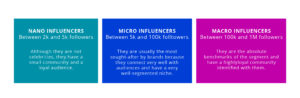
The first thing you should do is identify influential people in the field of your company, whether they are highly recognized, have a relationship with your organization, or even are a part of the company. They can be clients, followers, collaborators or an employee. Create a map with possible candidates, investigate their history, strengths and weaknesses, the social networks they use, the type of content they publish, and take into account the key metrics of their accounts: Audiense y BuzzSumo. In any case, it is important to take into account the standard classification that most companies use to understand influencers according to the number of followers they have:
4. Set a budget
Cost for rewards is the first variable you should have in sight. How much money from your digital marketing budget could be set aside for this? And while it is true that the influencer can be rewarded for mentioning your product, service, or company, a very successful influencer marketing strategy requires a monthly budget and resources that are aligned with your goals and objectives.
There are different compensation models:
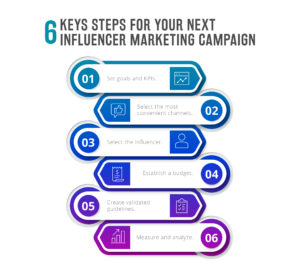
5. Create validated guidelines
Both parties – company and influencer – must establish some guidelines with which they agree, such as the objective of the activity and scope of work; the tone and voice of the brand and campaign; examples and templates for publications; lists of topics or information that cannot be shared publicly, among others.
6. Measure and analyze
It is essential to monitor the campaigns since you cannot improve what is not measured. Make sure the influencer performs their activity according to the guidelines and scheduled dates. Also, you must monitor the campaign to ensure its effectiveness and check the ROI. A very useful free tool for this is Iconoquare.
In conclusion: there is no doubt that influencers are a great resource to leverage your digital marketing plan, with great possibilities for visibility and recognition. Are you interested? Contact us! Our experts are ready to guide you. For more information, click here.